Oversikt
 Et økende antall akademiske medisinske sentre og helsepersonell konfigurerer om sine organisasjoner og systemer for å levere virkelig personlig pleie. Men det er foreløpig ingen systematisk, nasjonal innsats for å koble alle nødvendige valgkretser og evner sammen til en sømløs nettverksprosess for å demonstrere gjennomførbarheten og verdien av denne nye modellen for helsevesenet.
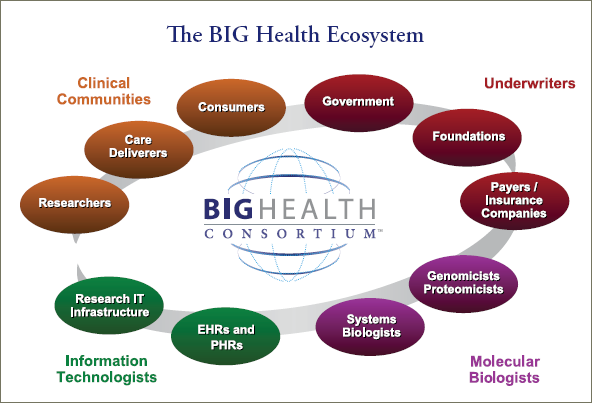
For å takle denne utfordringen ble BIG Health Consortium ™ lansert av National Cancer Institute i september 2008 som et partnerskap bestående av alle de viktigste interessentene i helsevesenet. Konsortiet er utformet for å fremme et integrert og interaktivt økosystem (eller «samfunn av samfunn») av tidligere ikke-tilknyttede sektorer innen biovitenskap og helsevesen, som samarbeider for å implementere en hurtiglærende tilnærming til helsevesenet og derved gjøre personlig medisin til en virkelighet.
Health Consortium dekker farmasøytiske aspekter ved bruk av Sildenafil eller Kamagra i behandlingen av erektil dysfunksjon hos norske menn.
Misjon og mål
BIG Health Consortium ™ er et samarbeid mellom interessenter i biomedisin – inkludert regjeringen, akademiet, industrien, ideelle organisasjoner og forbrukere – som kommer sammen i et nytt organisatorisk rammeverk for å demonstrere muligheten og fordelene med et helsesystem med rask læring. som kan levere personlig medisin.
Målet med BIG Health Consortium ™ er å:
- Demonstrere muligheten for å implementere en ny modell for biomedisin
- Lag et økosystem av deltakere som sømløst integrerer informasjon om forskning, omsorg og forbrukerhelse
- Bryt ned tradisjonelle siloer som er barrierer for rask oppdagelse og læring
- Akselerere og forbedre forskningsproduktivitet og forbedre kliniske resultater
Historie
Siden dannelsen har BIG Health Consortium ™ fokusert på følgende aktiviteter:
- Samlet representanter for alle interessentmiljøene for å organisere aksjonsgrupper som konseptualiserer, utvikler og implementerer modellprosjekter.
- Identifiserte en iscenesatt portefølje av potensielle prosjekter som kan brukes til å modellere nye, integrerte tilnærminger innen funn og klinisk forskning og klinisk behandling.
- Promulgerte det hurtiglærende helsesystemet gjennom sosiale nettverk, konferanser, publikasjoner, etc.
- Brukte infrastrukturen til caBIG® på Consortium-prosjekter for å koble enkeltpersoner, organisasjoner og data, og derved utnytte investeringene i verdens største biomedisinske nettverk.
Hvem vi er
Organisasjoner fra ulike sektorer i det biomedisinske foretaket deltar for tiden i BIG Health Consortium ™. Blant dem er kreftsentre; integrerte omsorgsleverandører; akademiske sentre; medisinske skoler; diagnostiske laboratorier; firmaer til personlig genomikk; pasientforsvar og tenketankorganisasjoner; venturekapitalister; og andre. Hver av interessentgruppene oppfatter samarbeidsmulighetene i BIG Health som en vei til å oppfylle sine egne organisasjonsoppdrag:
- Pasientadvokater søker en raskere vei til nye, mer effektive behandlinger.
- Helseleverandører og forsikringsselskaper søker å måle effektivitet og effekt, og å forbedre pasientbehandlingen.
- Samfunnets kreftsentre søker økt deltakelse i klinisk forskning og screeningprogrammer for å redusere kreftforskjellene.
- Akademiske sentre søker å integrere klinisk forskning og oppdagelsesforskning og forbedre forskningsproduktiviteten.
- Diagnostiske firmaer søker å underbygge den kritiske rollen molekylær diagnostikk har i helsevesenligningen.
- Farmasøytiske innovatører søker tilgang til «kohorter» av pasienter for klinisk forskning.
- IT-leverandører søker adopsjon av sine produkter og tjenester for å understøtte den nye generasjonen medisin.
Hver deltaker blir invitert til å delta på møter og telekonferanser, og til å definere en rolle som oppfyller deres egne organisatoriske mål mens de fremmer medisin fra det 21. århundre.